2 Patents Pending
NVIDIA Inception
17 Benchmarks Validated
Tier Zero Solutions  ·  The Dynamic Complexity Framework  ·  Patent Pending
You cannot code infinite chaos.

So we didn’t. We built a physics engine instead.
Any complex system. Any domain.

One engine — configured to your domain in weeks, not years.

Point it at a decision and it becomes a decision engine.
Point it at air and it becomes a wind tunnel.
Point it at a market and it becomes a trader.
Point it at a world and it builds one.
Same math  ·  Unmodified  ·  Every time

And each one holds where the specialist tool breaks —
the moment the system gets truly complex.

The Empty Brain
Your Domain. Your Data. Our Brain.
IBKR · Founder Capital Deployed
Operational

Three symptoms. One cause.

You are probably paying for at least one of these right now.
Most enterprises are paying for all three.

Token Overhead

AI spend compounding faster than anyone modeled it — in 2026 a major engineering org burned an entire year’s AI budget in four months, a matter of public record. Nobody can say which model belongs on which task, let alone defend the answer to a board.

Middleware Collapse

Message buses, orchestration layers, integration glue. Every nested system needs another layer to talk to the last one, until the layers are the system. You stopped maintaining logic a long time ago. You maintain plumbing.

Scripts That Break

No rule set covers infinity. Every edge case nobody anticipated is an outage, a loss, or a headline — and writing a bigger rule set is the wrong problem to solve.

The architecture underneath was never built for complexity — so every fix is another rule bolted onto the last one. More rules can’t solve a problem caused by rules. Tier Zero skipped the rules entirely and defined the underlying physics instead.

License the engine. We configure it for your domain.

Radically Efficient
Continuous Memory
Cross-Trains, No Forgetting
Eliminates Failure-Point Scripting
Infinite Nesting, No Middleware
Deterministic & Auditable
Murmuration of starlings — the complete relational structure in motion

How can one engine do all of this?

Because underneath every Tier Zero product is something genuinely rare: a new computational primitive.

A primitive is a basic building block of computing — the way the transistor is the building block of every electronic device. Discover a new one and you don’t get a better product. You get a new class of products. That is why the same math predicts, simulates, generates, and decides without being rebuilt in between. Only the configuration changes.

It sees the shape, not the signals
Traditional systems add signals together: Signal A + Signal B + Signal C = Score. The DCF evaluates the complete relational structure simultaneously — the way a murmuration of starlings moves as a unified shape, not as 10,000 individual birds tracked separately. That is why it holds up where scoring models fall apart.
Nonlinear — and still deterministic
This is the combination that exists nowhere else. Decision tables and scorecards are perfectly auditable, but they can only add. Risk models capture the nonlinearity, but no one can audit them — so they get fed into the auditable engine, and the thing that actually drove the outcome is the one thing nobody can inspect. The DCF collapses that trade. It evaluates the full relational structure, and every decision still replays from a seed with every assumption declared. When the evidence is thin it says so and returns a shortlist rather than manufacturing a winner.
Whatever you point it at, it hands back resolved.
A prediction, a simulation, a generated world, a decision — four modes, one outcome: resolved, with the whole chain of reasoning still attached to it.

“A fundamentally different mathematical foundation for intelligent system design.” — Independent IP Assessment  ·  Landfall IP  ·  2026

The Receipts

Proof, not promises.

Every result below ran on a single residential computer.
NVIDIA Inception Program
2.4×
More accurate than the AI-research standard (GRU-64) — Mackey-Glass, the canonical chaos benchmark, 647 parameters.
300×
Faster to the Ahmed-body benchmark — F1 computational fluid dynamics, 102.7 seconds vs. 36+ hours on a multi-core cluster.
150 FPS
1M-cell emergent world — 14+ nested domains simulated together, from geology to agents to trade.
$82/mo
Competing alpha on Numerai Signals — against funds running server farms, on one home electric bill.
3 days
A new domain, configured — not built. TokenWake went from a cold challenge to a working forecaster in one weekend — on the same mature engine behind every number above. Nothing changed but the DomainSpec. Deployment is a configuration, not a twelve-month build.

One Engine, Every Domain.

The same engine, configured for each problem. Five domains operational today — and 17 more validated against industry benchmarks.
Not five products. Five configurations.

Click your use case below to see our operational example ↓

01 · Prescriptive
TokenWake — Precision Token Forecasting
Visit tokenwake.io ↗
One workflow description in.
Three answers back — from the same run, for one price.
1 What it will cost 2 Which model to run 3 Where it’s wasting money
1AI Spend Forecasting
Which model, for which work, at what real cost — and can the CFO defend it.

Every engineering org is buying tokens at a scale nobody budgeted for, and no one can tell the board why this model over that one. TokenWake sweeps every model and role pair against your workflow and returns the cost-versus-exposure frontier — with the receipts to defend the choice.

4 Months. A year’s AI budget, gone.
In 2026 a major engineering org’s twelve-month AI budget was exhausted in four — a matter of public record. Not from waste anyone could see, but from workflows quietly looping on their own output, spending on work that never shipped.

We modeled a deployment shaped like that, then added the guardrail a competent team reaches for first — a per-session spending cap. TokenWake priced exactly what it buys: $623,491 saved (28.3% of spend), 23.1 days bought, 20,459 runaway sessions stopped. The deltas hold whatever budget you assume.

You cannot buy your way out of a badly-shaped loop.

A modeled scenario under fully declared assumptions. TokenWake does not model any specific company and makes no claim about anyone’s actual spending.

2Model Selection
Every model, swept and ranked.
144
Configurations Swept
Every model × role pair, exhaustively
7
Providers Priced
12 models · published pricing, Jul 2026
64
Simulated Futures
Same 64 for every candidate · replays identically for any auditor
Inbound
How This Domain Arrived
Asked for by a client · configured, not engineered
Every combination. Identical conditions.

TokenWake doesn’t test a shortlist and guess at the rest — it runs every valid model pairing under the exact same conditions, so the comparison is truly fair. And it tests them on your workflow, not a public leaderboard.

Cost Is Not the Only Axis

The cheapest model is rarely the cheapest outcome. TokenWake prices silent failures against expected API spend. In one 196-way sweep the fleet cheapest on paper finished dead lasta silent failure would have to cost less than $1.56 for the cheapest fleet to be the right choice.

It Tells You When It Doesn’t Know

Every recommendation replays from a scenario hash and master seed — your CFO can re-run it, and so can an auditor. When the lead is sensitivity-heavy, it hands back a shortlist, not a false winner. Confidence is reported, not performed.

3Workflow Diagnostics
Where it’s wasting money — from the workflow shape alone. No telemetry, no code, no access to your systems.
It finds the money pits

Steps looping on their own output; loops whose cost compounds. Priced per completed task — so it tells a real failure from a task cut off by its own spending cap.

It refuses to certify what it can’t

In one set, three of five common agentic patterns were declined at compile time — and TokenWake named the cause (no cost ceiling; staffing that can’t absorb the rework) instead of returning a confident number.

02
Generative

Creating complex, emergent realities from physics — behaviors emerge from the math, not from rules.

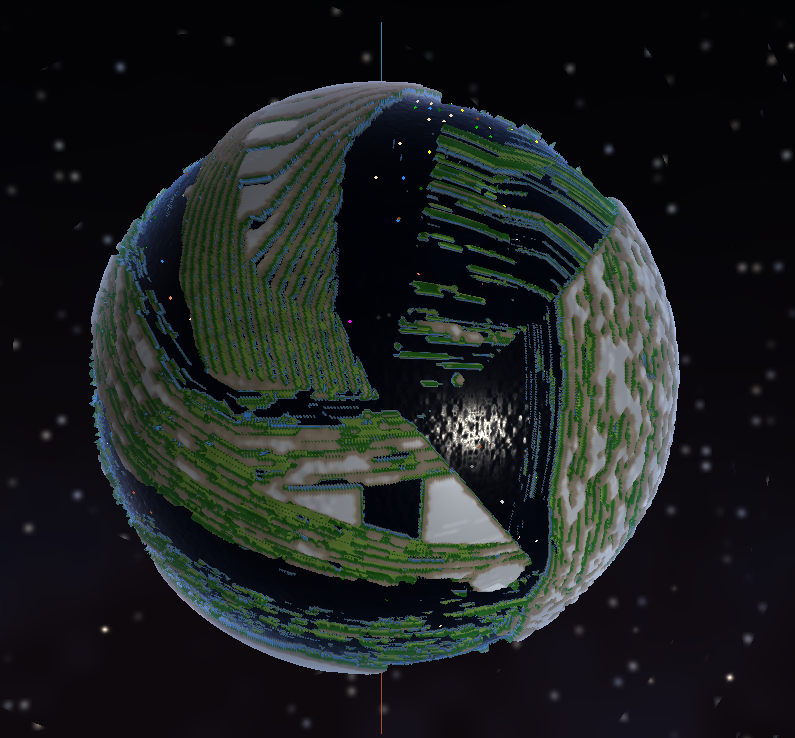
The Everfall Spiral

150 FPS
30,000 × 30,000 spherical world  ·  RTX 5090  ·  1M vertex cells

A self-sustaining civilization simulator governed entirely by physics — geology, weather, economics, and every agent decision from one framework. Behavior emerges from the math. Nobody has to anticipate it.

Deep-Time World Generation

Before a single agent spawns, the engine simulates millions of years of geological violence — tectonic subduction, meteor strikes, weathering — to physically carve the biomes, rivers, and deep-crust resource veins.

Emergent Economics

Settlements form pull-based supply chains, trade caravans, and comparative-advantage routes. Families of farmers and miners compound advantages across generations. None of it is scripted.

Absurd Architectural Scale

Weather, terrain, individual agents, and civilization-wide economics running simultaneously as nested DCFs. Thousands of agents. 150 FPS. One GPU.

Everfall Nested DCF Domains
  • Agent Decision Making
  • Demand Forecasting
  • Settlement Orchestration / City Building
  • Weather
  • Resource Production
  • Planetary Formation
  • Plate Tectonics
  • Orbital Dynamics
03
Adaptive

Monitoring and governing AI agent behavior in real-time — catching drift before it becomes failure.

AI Behavioral Governance

The “FICO score” for autonomous agents.

The same DCF engine that builds emergent worlds monitors every agent’s behavioral metadata in real-time — blocking catastrophic tool calls before execution. Plug-in architecture. No PII. No system interfaces required.

Tool Call Trajectory

Monitors what the agent intends to do, not just what it did. Catches adversarial curvature and injection attempts before execution.

Behavioral Drift Detection

Tracks deviation from established attractor baselines. Value corruption and goal misalignment signals surface before they become compliance events.

Native Circuit Breakers

Engage automatically at Restricted threshold — blocking execution before damage occurs. No human in the loop required for the initial stop. Four authorization levels, from observe-only to zero-drift-tolerance, configurable to your risk appetite.

S-Score
Single Agent Behavioral Health
Live

Real-time behavioral health score for individual agents. Monitors tool call trajectory, drift, value corruption, anomalous cooperation patterns, and adversarial curvature.

T-Score
Agent-to-Agent Trust
Live

Real-time trust score on every inbound A2A request before it is acted upon. As multi-agent networks proliferate, each agent evaluates the trustworthiness of requests it receives from other agents.

C-Score
Cohort Management
Next Phase

Monitors how behavior diverges from parent baseline across a fleet. Flags individual agents drifting outside acceptable range before systemic failure occurs.

0.80 – 1.00 — Trusted
0.60 – 0.79 — Provisional
0.40 – 0.59 — Monitored
0.20 – 0.39 — Restricted
0.00 – 0.19 — Quarantined / Circuit Breaker
04
Predictive

S&P 500 Market Trading  ·  Extracting predictive signal from chaotic, high-dimensional financial data without rule sets or retraining.

Zero the AI / S&P 500 Predictive Trading

30%
live S&P 500 return  ·  Jul 2025 – Feb 2026, full signal

Alpha is return above the market — the measure of pure predictive edge. It cannot be manufactured: no capital, compute, or headcount creates it. Either the model sees what the market doesn’t, or it doesn’t. Ours does. Our live trading runs on the full signal. Numerai independently confirmed it exists.

Numerai Signal Validation

Numerai is a global quantitative competition that aggressively neutralizes submitted signals — stripping out sector momentum and market-riding factors to isolate only genuine predictive value. On resolved rounds, our alpha tracks alongside institutional players with assets under management in the billions — on the same public leaderboard, same data, same rules. Our live trading uses the full, unneutralized signal.

30% Live Market Return

Jul 2025–Feb 2026. Eight months of live S&P 500 trading on the full signal. Running on IBKR since June 2026 with substantial founder capital deployed — real skin in the game, third-party verified metrics incoming.

Radically Efficient

Entire pipeline runs on a local home workstation at $82/month electric. Self-optimizing. Zero daily maintenance. We literally just check the dashboard.

30%
Live Market Return
Jul 2025 – Feb 2026, live portfolio
Numerai
Signals · Live
Blind adversarial tournament  ·  vs. funds on server farms
$82
Monthly Electric
Entire pipeline, home workstation
Jun '26
IBKR Deploy
Founder capital deployed live  ·  Third-party verified metrics incoming
Why markets?
The S&P operates on publicly available data and fat-tail events, severe regime changes, and irreversible live capital. If the math extracts a signal from this noise without breaking, it provides undeniable empirical proof that the DCF architecture works.
05
Simulative

Running full physics simulations at a fraction of the compute cost — on residential hardware.

F1 / Computational Fluid Dynamics

300×
102.7 sec vs. 36+ hours on a multi-core cluster  ·  single residential GPU

The Ahmed body aerodynamics benchmark completed in 102.7 seconds on a single residential GPU at 12M cells — against an industry multi-core cluster that runs 36+ hours. Proportionally 300× faster. No cluster. No cloud.

Simultaneous Resolution

Pressure, velocity, and vorticity computed in a single pass at the same time step — not sequential post-processing. Three fields. One computation.

Ahmed Body Benchmark

Drag coefficient 0.37 against a published range of 0.32–0.35; pressure coefficient 0.32 against 0.3. Close to the mark at a radically smaller compute — enough to sweep thousands of candidate designs and filter down to the few worth putting on a cluster.

Single GPU. No Cluster.

All output produced on one residential NVIDIA GPU, with 99% fewer parameters at near-peak tensor-core utilization. Domain configured and first validated results produced in under one week from a standing start.

Vorticity Magnitude Field
Vorticity Magnitude
Organized wake structure, rotational fidelity
Velocity Field
Velocity Field
Separation bubble & shear layer rollup
Pressure Field
Pressure Field
Stagnation point at leading edge

End the Build vs. Buy Debate.

You don’t rebuild the brain from scratch. You don’t buy a black box. You license the mathematical engine — and we deploy it in your domain.

The Old Dilemma
Build custom architecture or accept a vendor’s black box.
  • 12–24 months to build custom architecture
  • Dedicated ML engineering team required
  • New architecture for every new domain
  • Black box outcomes — compliance nightmare
  • Retraining destroys prior knowledge
The DCF Way
Buy the brain. Deploy your DomainSpec — the configuration layer that maps your environment to the DCF engine. Start delivering.
  • Configured and computing in 1 Agile Sprint
  • Auditable, immutable scoring — no black box
  • We’ve built 20+ DomainSpecs. We’ll build yours.

Behind the Engine

Patrick Barletta

Founder & System Architect

Patrick doesn’t build basic software; he models chaos. His architectural foundation wasn’t forged in standard computer science, but in the highest echelons of competitive complexity and systemic optimization. As a world-record holder in Factorio’s notoriously punishing Pyanodons Alternative Energy speedruns, he mastered the optimization of exponentially expanding, highly volatile networks. He transitioned this obsession with systemic exploitation into deep quantitative research, architecting the proprietary fractal math engine that generated live alpha in under a year of trading, with backtested projections exceeding 45%. Now, he has deployed that exact engine across four distinct industries — from global equities to autonomous agent governance to planetary-scale civilization simulation to aerodynamics.

Regina Toffolo

Co-Founder & Strategic Operations Director

Regina anchors the team with cycle-tested execution. With an extensive 23-year tenure in Decision Infrastructure at PNC Bank, she supported the systems, data, and business rules needed to execute credit decisioning policy at an institutional scale. Before her time at PNC, she worked as a Business Systems Analyst at Integic, participating in the development of a custom Navy financial system. She knows exactly what a compliance wall looks like and what executives need to see to trust an automated system. At Tier Zero, she translates Patrick’s complexity math into quantifiable, regulation-ready trust.

“Reality is a computable system.”

— Patrick Barletta

2 Patents Pending NVIDIA Inception 17 Benchmarks Validated IBKR — Founder Capital Deployed Operational

Choose Your Path

Every frontier starts with a conversation.

Business & partnership inquiries:
Regina Toffolo, Co-Founder & Strategic Operations Director
rtoffolo@tierzerosolutions.io

All inquiries are confidential.

Tier Zero Solutions

One engine. Infinite frontiers.

Patent Pending  ·  DCF

Begin the Conversation